by
Larry Pearce
11/25/25
What follows is a short clip from an article in Mennonite Family History, July 2025, by William “Bill” Thomas of nearby Johnstown, PA. In writing about his David Christner family, first of Elklick Township and then Conemaugh Township and then Jenner Township where I live, all in Somerset County, PA. Descendant David married Susanna Dietz around 1830. Their children in the 1840 census are listed as “free colored,” or mulatto as we would say.The records are confusing, but Bill Thomas does his best to sort things out. He mentions local familiar surname connections such as Alwine and Miller.
Susanna’s parents were likely from Lancaster County, PA, and is listed in the 1800 census as a “free person of color.” The town of Lancaster had 63 slaves in 1782, most born in America and worked as domestic servants. Most residents of Lancaster, including my wife’s Miller family were Lutherans of German descent. Slaves were introduced there and instructed in Christianity. My own Hill family ancestors farmed in nearby Adams County just below Gettysburg, along the Mason-Dixon line, and may have had slaves at that time, but they were emancipated with the state legislative act of 1780. A daughter married into the prominent James Wilson, Sr. (1704-1776) family and he, in his plantation will, passed his slaves through his “beloved wife Jean,” a “Negro man Will and Negro woman Rose,” to son James, Jr. [see “Synopsis of Wilson Articles”]. This is all to say folks in the Pennsylvania counties like Adams, Lancaster, and Bedford, part of which became Somerset, may have had indentured servants or slaves before the 18th century. Certainly, the sympathies of many went to the Black and people of color who did the hard labor in the South before the Emancipation Proclamation Act of 1863.
Susanna Dietz’s father Samuel’s last record in Lancaster County of 1802 has the family as German Reformed. The next record is for Sarah, his “free colored person,” west in my township of Jenner, Somerset County, 1830. Her background is German Lutheran. Ironically, my wife, who comes from the same tradition, and I, from the Presbyterian-Methodist tradition have moved to the United Church of Christ, a Reformed congregation in Somerset. We happily and worshipfully all speak English now.

Forwardstown along the old Pike, Somerset Co, PA, Beers Atlas, 1876, just south of Thomas Mills. Our Pearce farm now includes the Adam Rice acreage.
The son of Samuel was also Samuel and the family’s holdings are taxed on 200 acres, which laid on the east side of the Bens Creek near Thomas Mills. Susan and I also live on the east side of that Bens Creek. Several other local names should be listed here. Thomas says, “William C. Griffith of Jenner Township often rendered assistance to runaways.” He was of Quaker heritage and lived several miles from Samuel’s farm. But free Blacks also assisted these persons seeking their own freedom.”
Thomas writes, “Somerset Pike was a major transportation route [now PA 985] between Somerset and Johnstown. The Pennsylvania Canal passed through Johnstown and ran between Pittsburgh and Philadelphia.” It is believed that Griffith’s home was a “station” on the Underground Railroad. The 1860 census lists 12 Blacks out of 1,762 people residing in Jenner Township. I would be surprised if there were that many today and surely no farmers that I know of.
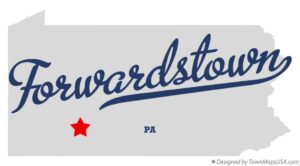
In 1854, Samuel’s daughter, on behalf of his 10 children, filed for sale of the family farm, which brought in about $44,000 in today’s money. By the way, daughter Susanna married a Christner, an ancestor of Bill Thomas, the inspiration for this piece, and they lived in Forwardstown where my wife and I live. The bloodlines of these folks is confusing and Bill does his best to unravel them.
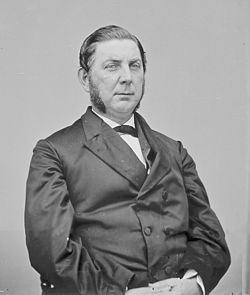
Hon. Alexander H. Coffroth (1828-1906) D-PA 16th District.
One interesting quote that he offers is from Somerset Democratic Congressman Alexander Coffroth as to the election of 1864:
“The embarrassment and humiliation a mixed-race voter encountered at the polls was sometimes not confined just to the man who approached the polls. For example, John Walter, and election judge at the Jenner Township polling place in Somerset County, Pennsylvania, reported that George Cristner was “mixed”; his mother is a mulatto; his reputed father was a white man” and was thus denied the right to vote . . . on account of color. While Walter confidently asserted Cristner’s genealogy and, incidentally, his mother’s sexual history, a voter at the same precinct, John Johnson, was not so sure. Johnson began by describing Cristner as “a negro” but then backed up and said, “I don’t call George C. Cristner a negro, but a mulatto. I don’t know his father. I have seen his mother. His mother is the widon Cristner; she is pretty dark-complected; she has negro blood in her veins; she is a dark mulatto. Mrs. Cristner is a sister of George and Samuel Deitz, who are black – Samuel not so black, but George quite black.”
Johnson, under oath, qualified his testimony by saying that “hearsay, rumor, and innuendo” would implicate many more men attempting to vote.
Bill Thomas ends his article by citing some of the racial and genealogical injustices found or omitted from many important records. I’ll end this piece by saying that all of Thomas’ research came as quite a surprise. I can now add one more historical moment to my understanding of Somerset County’s history. We hope Bill will continue his work, and I look forward to talking with him. By the way, I’m in the process of converting a research project in the form of a newsletter I did many years to this website, “The Forwardstown Forecaster.” Look for the title in the right hand column.
Reference
Thomas, William “Bill,” “A Christner Family of Somerset County, Pennsylvania: Facing Prejudiceand Challenging Sterotypes.” Mennonite Family History, July 2025.
Last revised 1/14/26