by
Larry Pearce
12/20/25
After taking time off from family history research and writing, the last few months have been ablaze with enlightening, even shocking information. One piece just posted involves the peaceful, rural Somerset County, PA, farmland on which my wife and I reside having to do with The Underground Railroad. I’ll let you read it later so I can get on with this piece. But another story from the mid-19th century about which I received an e-mail claims that my Great-great-great Uncle Alfred Pearce’s family was involved in a questionable practice in the borough of Harmony, Butler County, PA, just after the Civil War. You can read all about what I knew 25 years ago in my somewhat lengthy post about Harmony and the history of the Pearce Woolen Mill, but here is a synopsis on Uncle Alfred and son Austen/Austin and the now defunct Harmony Savings Bank they ran, much made known through “The Historic Town of Harmony, PA”, by The Hon. John Wilson:
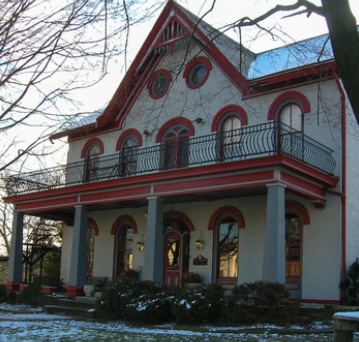
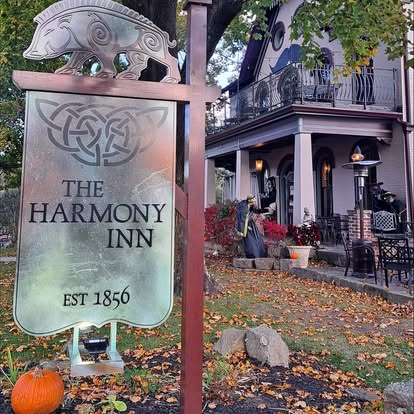
Austin Pearce House – now the Harmony Inn
The spelling of son Austin’s (1842-1914) name is altered for some reason from his grandmother Susan Austen after the Civil War. His spelling differs from Grandmother Susan on the grave markers at Pine Creek Cemetery. Austin is identified as “a prominent banker, mill operator, and railroad executive” in an early brochure titled About Harmonie. Notice that this spelling has changed also. One source has Austin working as a druggist after his time in the military. Wilson says that Austin began as a cashier for his father, but can’t explain the reference to Austin as “mill operator” nor when the family abode took on the son’s moniker. Another son, Isaac (1840-1912), served as an ordained chaplain with the U.S. military until his death in Baltimore. We wonder how the Alfred Pearce family could wander in such different moral directions. Isaac serving the needs of those young men fighting for our country and Alfred and Austin apparently serving their own needs. Or were they? We’ll offer another view in a minute. The Austin Pearce House featured black walnut and chestnut woodwork and, supposedly, the first indoor plumbing in the area. Father Alfred kept a pair of spotted Arabian horses and a private coachman for show. As we’ll learn, after the Pearce’s legal problems were somewhat resolved, Austin resettled south in Pittsburgh and Alfred sold the house and ranch but stayed to work in Harmony. According to an advertisement for the property, which later was converted to a fancy hotel, “This house is centrally located and is conducted in first-class style. In connection with this house will be found the best stable in town. Also, large scales suitable for weighing livestock, horses, sheep, etc.”
The Guidebook to Historic Western Pennsylvania says that Alfred expected Harmony to become the northern terminal for the narrow gage Pittsburgh-New Cumberland and Lake Erie Railroad. The Wilson book calls it the Pittsburgh, New Castle and Lake Erie Railroad that was to run only from Etna, on the Allegheny River above Pittsburgh, to Zelienople, the closest town to Harmony. Incidentally, a straight line from those two points, 20 miles apart, runs right through the Pearce property on Pine Creek, but we know of no railroad lines running that close to our original homestead. Several lines did haul local coal to the river barges and pick up passengers bound for Pittsburgh. Apparently the narrow gauge plan failed and the Pearces were forced to sell the massive house in 1879. Wilson says, “The bank got into deep water by bad investments.”
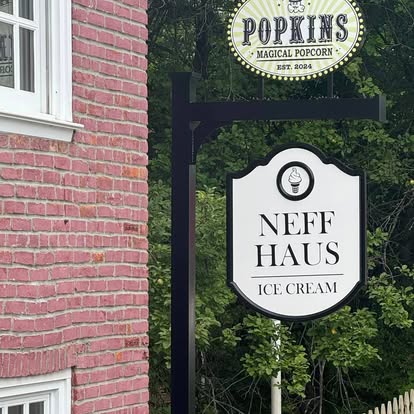
So this is where our new information picks up. The source is a series of e-mails from Sam Hopkins, who moved to Harmony from Pittsburgh in 2017 and started an ice cream and popcorn shop called Neff Haus, a house named for Jacob and Maria Neff in 1807. Sam purchased a few of the other Harmony Society buildings that had been affiliated with the Harmony Society. the pietists who came to American from Germany in 1805.
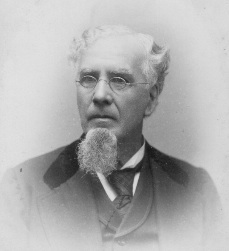
Alfred Pearce
(1816-1895)
Harmony, PA
Alfred Pearce (1816-1895) was born in England, the second son of Richard and Susan Pearce, my great-great grandparents who had John Wesley Methodist leanings. They settled in Pittsburgh’s North Park in 1820 and operated a grist mill there. After Alfred married Sarah Lachman, they purchased the woolen mill in Harmony from the Harmonites and, as tradition has it, made blankets for the Union Army. The business was profitable and Alfred bought the property where he constructed the historic Harmony Inn in 1872.
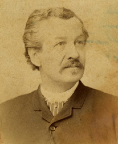
Austen/Austin Pearce
(1842 – 1914), son of Alfred & Sarah
All the while he and son Austin served as directors and cashiers at the Harmony Savings Bank. According to Sam, within five years the Pearces and a Ralph Palmer began quietly “borrowing” (or “embezzling”?) money supposedly, we believe, for Austin to fund his railroad project. Either they thought all this was for the good of their community or they were short on legal advice. Here’s the rub: In all my research and visits to old Pearce property, I never heard a thing about this scandal. Of course, growing up in Pittsburgh’s suburbs, we had other historical subjects to study. I prefer to think that my relatives had good intentions. As history writer Val Atkinson urges, we should avoid coating what we read or hear with the “wax” of pre-judging. The bottom line is that all the “borrowers” were caught in 1877, locked up, and scheduled for trial the next year.
According to Sam, “The total stolen by the three was $100,000 (roughly $3.2 million in today’s money. Alfred’s share was $8,000 ($260,000 in today’s money).” Sam says that the night before the trial, a man named Latchow went to Alfred’s wife Sarah and told her that if she signed their magnificent house over to the bank, all charges would be dropped and Alfred and their son would be released. Alfred had put her name on the deed to protect the property. The bank apparently added the following stipulations with the signature: The family could live there rent free for four years but they had to pay taxes and upkeep. After that they could retain ownership for that $8,000, which is believed to have been paid back eventually. We don’t know all about Austin and Palmer, and we’re not sure what Sarah knew or what Alfred might have told her, but she signed the document. The next day the judge asked the District Attorney for evidence of the charges, and he responded that he had none. Alfred, Austin, and the third man were released.
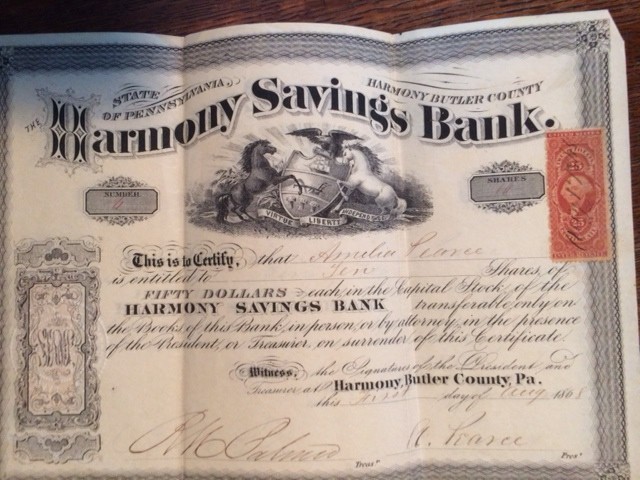
$500 Stock certificate for Harmony Savings Bank, signed by President Alfred Pearce.
Austin faced a hostile town folk and so, after transferring some land back to the bank, moved to Pittsburgh where he sold insurance. In the days before media I doubt that his clients there knew his history. Ironically, Alfred stayed in Harmony and sold real estate. He certainly would have had “lots” of experience at that.

This is where the Pearce case becomes historic. While waiting, it’s believed the bank sold the Pearce debt to two sisters, Mary and Jane Wilson, probably as a legal “option,” again presumably with good intentions. In other words, if the Pearce deal fell through, the house could be bought by the Wilsons. While they thought they owned the Harmony House, the Wilson sisters began eviction notices, which lasted years. But apparently, the Pearces paid the bank because they had the money and were not ready to relocate. The shame is that the ladies were out their investment, after which the case went to the Pennsylvania Supreme Court, with the father and son again getting off the charges. It seems the bank took everything the Pearces had in the railroad, but they got off.Their decision set a national legal precedent in 1885: “Contracts allowing people to buy their way out of criminal prosecution are against public interest and therefore void.” Unfortunately the sisters lost their money and the DA couldn’t refile because of the statute of limitations. We don’t know what became of the Wilson sisters, but it’s interesting to me that “Wilson” is the name behind much of the writing of the day and the esteemed Honorable John Wilson (see above). The Supreme Court verdict and various newspaper articles are too much for this piece but are available on search engines and Newspaper.com.
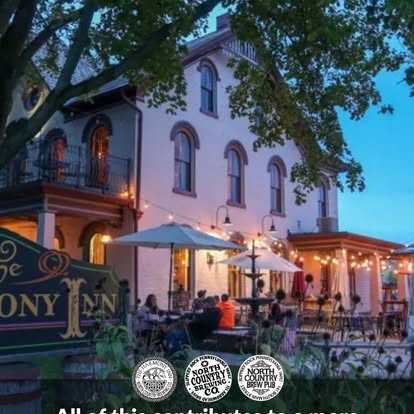
In 1891, Alfred sold the mansion to the Ziegler family who remodeled it into the haunted, but famous Harmony Inn, although this link states what we’ve laid out a little differently. So it is with history 150 years. Sam is quick to add that Alfred and Sarah then moved to Pittsburgh’s affluent East Liberty, “Only a few blocks from where I grew up.”
Going forward, I have other questions linking my ancestors to the other men in question here: Palmer and Latchow. I think of the Arnold Palmer family from Latrobe, where the Pearce Woolen Mill eventually moved. Now read about my (3X) great-grandfather William Hill (1799-1875), way back, who moved his family from Slippery Rock, to Leesburg, buying and building successful properties on the heavily travelled route between Pittsburgh and Erie. And then there were the previously mentioned Methodist-leaning Richard Pearce grist millers, who attended the old Cross Roads Presbyterian Church when they came to American in 1820 because it was the only church around. Often meeting in homes, these Weslians eventually built their own church just north of the mill and named it Salem. Before long, however, they realized that the Pittsburgh-Erie route was much more heavily travelled and literally picked up the church and relocated it to the west in Wexford.
Allow me to close with a somewhat startling experience I had recently while taking my Continuing Education requirement to maintain my Registered Representative (RR) qualification with the Financial Industry Regulatory Authority (FINRA). In the very first section I was informed that new, clearly stated rules now forbid RRs to borrow assets from clients at any time for any reason. Without going into the details, I was reminded of the conflict of interest that such actions might have on both parties. I’ll let you make the connection to Alfred and Austin Pearce of the Harmony Savings Bank, but what timing to learn of their struggle and the regulations I’m under. I’m happy not living in a house like the Harmony Inn and all the questions that might come with such comfort.
Sources:
Hopkins, Sam. E-mail. November 14, 2025
Atkinson, Val. “Searches Without Wax,” November 2004
Last revised 3/2/2026